
Place vs. Time: The Ugliness of Contemporary Culture
Since the middle of the 1300s, as the Black Death ended, the world’s population has continuously increased. Consequently, beginning in the early 19th century, when the global population for the first time reached one billion, rapid population growth has been the foundation of both modernity and post-modernity, making everything grow in both quantity and speed while eventually breaking down previous hierarchies between high and low culture.
Demographic growth has made possible industrialization and urbanization, changing the appearance of the world as we know it.
Regrettably, it has also made our world uglier.
The reason for this is the complex interconnections between capitalism, consumer culture, and population growth: the economic system needs a steady stream of new consumers, who have to spend more money and buy more things than the previous generation. Capitalism requires constant growth to sustain itself. This has led to the streamlining of production, simplified architecture, and the expansion of a global logistics system. Quality materials, like wool and slow-growing wood, has been replaced with polyester and plastic.
However, this 700-year long development is about to come to a halt.
By 2050, the world’s population is predicted to decrease. 155 of the world’s 204 countries will experience a depopulation trend, which will require new economic systems, a new consumer culture, and a new approach to production.
Already today, there are enough clothes to last six generations without any new production needed.
Fewer houses will need to be built, and the existing ones will need renovation and repair.
Some geographical areas will be deserted, and the towns there will turn into ruins. It will be a very different kind of world than the one we inhabit now; a return to slowness, is the best way to summarize it, if I were to guess.
Many of the companies founded in the post-war yearsI, like H&M and IKEA, owe their success to this extreme - the world population more than doubled between 1940 and 1990 – population growth. To sell cheap things in large quantities was made possible because of the ever-increased global population.
Time completely dominates place; everything is seemingly available to anyone, regardless of where they are in the world. Handmade coasters from Bali are sold in Copenhagen shops, symphony orchestras from Vienna can be live-streamed in Mexico City, Kenyan art is displayed in Abu Dhabi.
And online, endless quantities of information and objects are only a click away.
Does that mean that during the coming period of degrowth, small-scale and slow will be key words in business? If so, good news for Lohi Journal, I suppose, except for the fact that we’re still about twenty years ahead of the curve. In 2025, we’re still part of the old system, albet in one of its last decades before the systemic shift is initiated.
Slow vs. Fast Culture
Slow and fast are not opposites but can exist in the same place. The slowness that existed before modernity (and that will exist soon again) can be found already today, for those who know where to look.
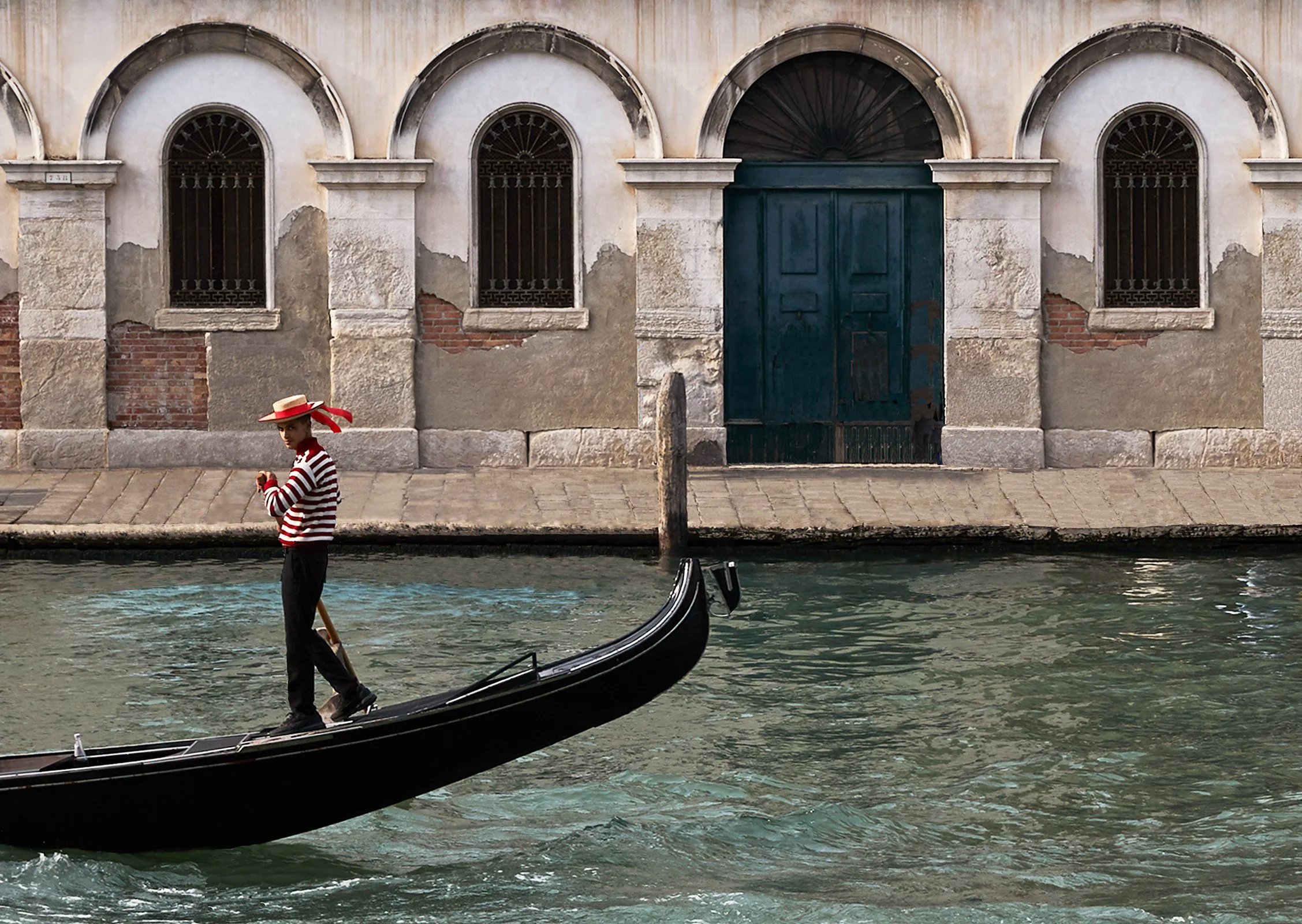
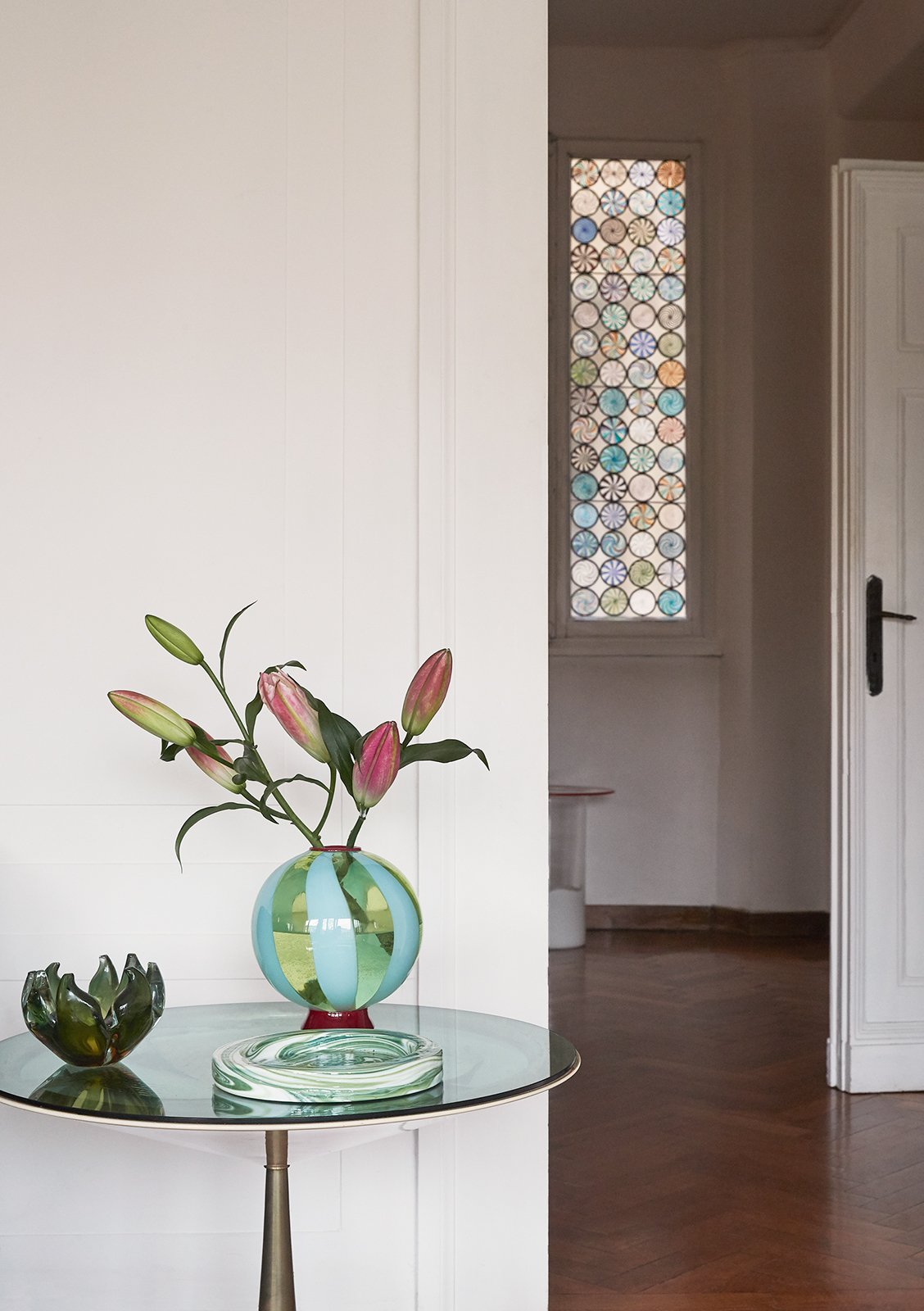
Even in a place like Venice, you can find pockets of what life used to be like, before the mass-tourism of the 21st century. In the artisanal neighborhoods of Calle Delle Botteghe – with shops like Chiarastella Cattana and studio of glass designer France Thierard (who we interviewed for our third print issue) – you’ll find a quieter pace, as most tourists aren’t interested in going too far from the main sights.
France Thierard Showroom
Something I often think about, when in Venice, is that most visitors don’t look directly at the sights, instead they look at the Rialto Bridge and the Bridge of Sighs through their phone screens. The three-dimensional city is transformed into a two-dimensional experience. Can they afterwards claim to have been to Venice? Did they notice what the air smelled like, did they engage with the locals (outside of telling the waiter what they wanted to order)?
In this near future, defined by a negative population growth, time will be both fast and slow. It will slow down as capitalism is replaced with a new economic system, but communication will remain fast, supported by new technology.
Does this mean that time will continue to dominate space? Or will space reclaim its relevance?
Living between Sweden and Italy, like we do, means living between two cultures, different in how they related to matters of time and space. Sweden is one of the most digitized countries in the world, screen have been a natural part of the culture for decades.
Its population is used to having access to information from all over the world, and Swedes are also a travelling people; because of the winter darkness, many regularly visit places like Thailand, Spain, and the Balearic Islands.
There have also been several intense waves of immigration to Sweden, the modern wave beginning in the postwar era, when many Swedish industries needed workers, who often moved there from places like Greece, Finland, Italy, and Yugoslavia. Later, refugees arrived from Poland in masses, the cultural exchange between Sweden and Thailand led to a large community of Thai expats, and more recently, there has been an influx of people coming from Afghanistan. Contemporary Sweden is a mix of many different culinary cultures, and even in small towns, you can easily find Thai food, Indian restaurants, and kebab.
In Italy, local traditions are revered. The trattoria across the street from us, in our tiny località, would never serve anything that wasn’t associated with the region, and they only offer the traditional interpretations of local dishes.
To the chefs at the trattoria, the history of the place is more important than ephemeral culinary trends. Someone offering Thai food in the village would struggle to find customers.
If Sweden represents a contemporary obsession with being in the current moment, constantly updated and in the know, never missing the latest trend and not so concerned with knowing Scandinavian history, the Italian approach leans more heavily on local traditions and an emphasis on the peculiarities of a specific place.
This produces two very different types of aesthetic cultures: our Italian house currently needs to be repainted – we were considering painting it white, very common in Scandinavia, but were told by the comune that we could only choose between a few approved colours, selected based on how prevalent they have been in the area, historically speaking. There’s little room for individual taste or agency; we are told to abide local traditions.
In Sweden, on the other hand, our newly built house doesn’t have any connection to local aesthetics at all. To me, it looks like it’s out of place, and reveals a lack of interest in local traditions.
When the world became interlinked through Internet, and people could have live meetings while physically being on different continents, visual information quickly spread around the world.
Fashion shows, once showcasing industry secrets to a group of select few, are not livestreamed and the collections are available the day after via online platforms.
We now live in a culture of immediacy, where everything is shared instantly, only to be quickly forgotten and replaced by what’s considered novel in the next moment, and then in the next, followed by the next.
This has led to a society of excess. The Internet has accelerated a discourse that was already widely manifested, creating a culture where everything was continuously being replaced.
The beauty of Venice is still there but blocked by the many screens that share its strange allure with millions of followers on social media, all around the world.
All the trips taken in gondolas are being live-streamed to the families and friends back home in China, for them to like, send emojis and brief, emotional messages (“wish I were there”).
In the evenings, especially if it has been raining, you can see Venice’s beauty more clearly, it’s difficult to take Instagram-worthy pictures in the dark, and so you can catch a glimpse of how Venice was before mass-tourism and the demographic explosion of the 20th century.
You feel the magic of Venice, an almost metaphysical experience, but daytime, the emotion you feel the strongest is the desire to leave, to go somewhere where you can breathe, and your ears don’t hurt from the constant noises of the crowds.
Slow Fashion
I fear that this might sound like (and perhaps it is) the complaints of a grumpy old man, and so I want to nuance my reasonings so far, especially the example of Venice. The classic Venetian slipper was born in Friuli north of Veneto (thus known also as “friulane”). Due to post-war necessity. Italian women used their home textiles and bicycle tyres to make new shoes when new materials were scarce.
The simplicity of the design and the history behind it, together with the small-scale, local production process, is what makes these slippers beautiful, as opposed to the soulless objects I see on display in the windows of the nearby luxury boutiques. Again, it’s about how the cultural context of an object affects its aesthetic expression, but in the case of the Venetian slipper, the two are impossible to separate. They look like they do because of the effects of the war, people inventing a new type of shoes because they didn’t want to go barefoot. The lack of proper clothes led to the creation of something beautiful. Slowness can exist in a place defined by accelerated speed, you just have to look for it.
Piedáterre is interesting because of the lack of hype around it. Instead its qualities come from its materiality, the way that the shoes look, how they were designed, and their cultural context.
The future is bright.