
Telegram / Is IRL the latest trend?
“Recently, I’ve noticed that just posting images doesn’t get the same traction anymore… More reels?”. A few days ago, I came across this question on an acquaintance’s Instagram account, followed by approximately 74,000 people.
For man years, he’s posted carefully curated looks of himself, dapperly dressed and posing in all corners of the world. The purpose of his account is to draw traffic to his online shop, where he sells vintage clothes, sourced from Italy and Sweden. But this autumn, he’s noted that his images don’t reach as many as they once did, and subsequently there’s also less interaction between him and his followers.
He’s not alone, and there’re statistics to prove it: social media peaked in 2022, and ever since, average daily usage has dropped by nearly 10 percent globally, particularly among young adults.
The decrease is attributed to factors like the rise of “ultra-edited” content, a (healthy) decline in trust in “influencers”, and users seeking to spend time on more valuable activities.
I remember when Instagram was first launched, in 2010. Facebook had been an influential precursor, but Instagram was image-driven, which appealed to many (while also leading to a wider paradigm shift, where visual culture now holds the hegemonic position, resulting in a decline in reading skills).
It was initially used for communication among friends, but today, that has been replaced by consumption, as the communication now is primarily between brands and potential consumers.
Sponsored posts about things to buy and places to travel to have become more common than content posted by family members and friends. It’s less of a social medium and more of a commercial platform, where most posts treat the users as potential consumers.
What are people doing instead? It appears “screen culture”, once hyped as the future of humanity, the first step into a more digital and less physical reality, has been challenged by young people, who now are finding more traditional ways of connecting with each another; they’re meeting up IRL by going for walks together and sharing dinners.
The younger generations are also reading more books again, and not only in digital formats (or by listening to them on the commute) but actual, physical books.
A few weeks ago, I read a newsletter by a Paris-based fashion journalist who had visited Stockholm. He was surprised by the amount of people reading (physical) books in the Stockholm metro (and I’ve noticed the same thing, feeling like a dinosaur when I scroll social media on my phone while on the bus, surrounded by people reading physical books).
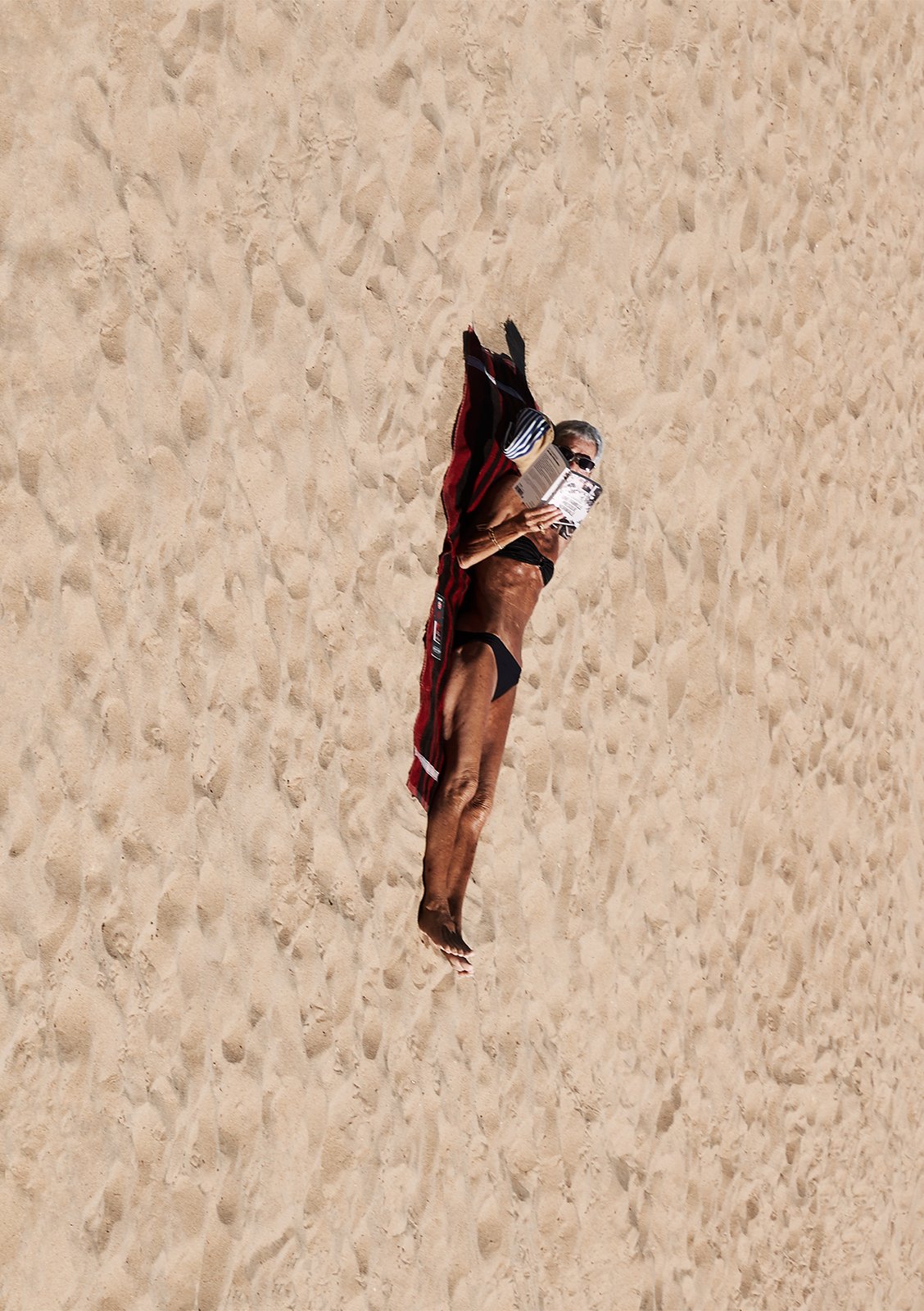
As we’re approaching the end of 2025, I wonder if this could one of the emerging trends that will continue to grow in the coming year? In interior design, it’s manifested through rougher surfaces, a greater emphasis on natural materials and a certain kind of rawness in materials (as referenced in Christian Kracht’s latest novel “Air”). Mixing new objects with vintage is still a popular way of adding character, both in private homes and in commercial spaces.
In travel, it’s manifested through a shift away from the generic, emphasizing instead the locally specific, and the desire to make every city and region stand out (though this is often done in strikingly similar ways).
Luxury fashion has struggled for some years now; it turns out that raising prices while lowering quality wasn’t aligned with the clients’ definition of exclusivity. The most interesting development in fashion is instead the growing presence of independent designers and smaller brands. For more than a decade, social media has accelerated fast fashion, selling the idea that you should wear a new outfit in every posted reel, but when it’s become unfashionable to post online, there’s no longer a need for those kinds of props.
In Russell Belk’s influential article Possessions and the Extended Self, the main tenet was that modern society, “me” has become conflated with “mine”; we define ourselves through our belongings and we perceive our social value depending on what we own.
Originally published in 1988, it was a reflection of its hedonistic times – just think of The Bonfire of the Vanities, American Psycho, and Wall Street and their depictions of materialism and attention to the polished surface.
The 1980s were a vastly different decade from the 2020s, especially when it comes to technology, ideology, and aesthetics. Once this year has ended, more than half of the decade has passed, and we’ll be able to see what’s taking shape and how this decade will be remembered. Even though we live in a politically volatile time, there have been signs of a more hopeful cultural shift approaching, the drop in social media activities being one of the most significant. So, log off the app, shut down your e-mail, and go for a walk instead.